

Having a small bathroom in Toronto can be a challenge — whether it’s in a downtown condo, an older house in the Annex, a semi-detached in East York, or a compact suite in Scarborough. But with smart design, the right materials, and clever layout choices, even a compact bathroom can feel spacious, functional, and stylish. Here are proven strategies, local considerations, and design tips to maximize space in a small bathroom in Toronto.
Why Small Bathroom Space Feels Tighter in Toronto, and What to Do About It
Before the design tips, it helps to understand some local constraints so you don’t plan something that’s hard to implement or too costly:
- Older building standards. Many Toronto homes built early-to-mid 20th century have smaller footprint bathrooms, less generous clearances, and more limitations around plumbing.
- Cold winters and humid summers. Materials, lighting, and ventilation choices are more critical here.
- Limited natural light. Many units or homes have small windows, or the bathroom may face narrow alleys or neighbours, reducing daylight.
- High cost of space. Real estate in Toronto is expensive; expanding square footage is costly or impossible. So optimizing what’s there is often the only path.
With that in mind, design solutions should respect both functional and aesthetic demands: keeping the space usable, warm (in winter), cool (in summer), moisture-safe, and good looking.
Smart Layout & Fixtures
- Choose wall-mounted or floating fixtures.
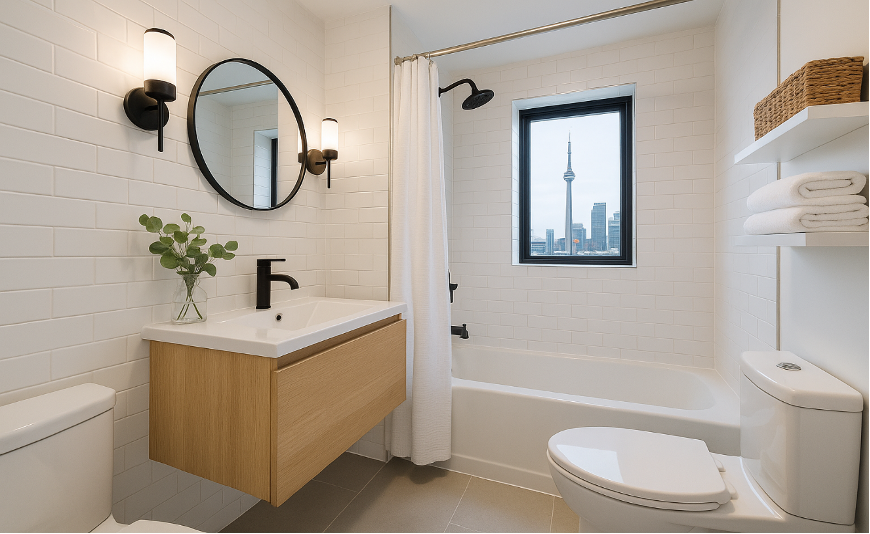
Floating vanities, wall-hung toilets, wall-mounted sinks free up floor area and give the illusion of more floor space. They make cleaning easier. - Compact, corner, or pedestal sinks.
If a regular vanity is too bulky, opt for a pedestal sink, or better yet a corner sink that tucks into an otherwise underused corner. Pedestal sinks take up less visual space. - Pocket or sliding doors instead of swing doors.
Traditional inward-swing doors eat into usable floor space. Using a pocket door (sliding into the wall) or an outward-opening door can free up valuable inches. Barn doors or sliding doors are additional options. - Walk-in or curbless showers with clear glass.
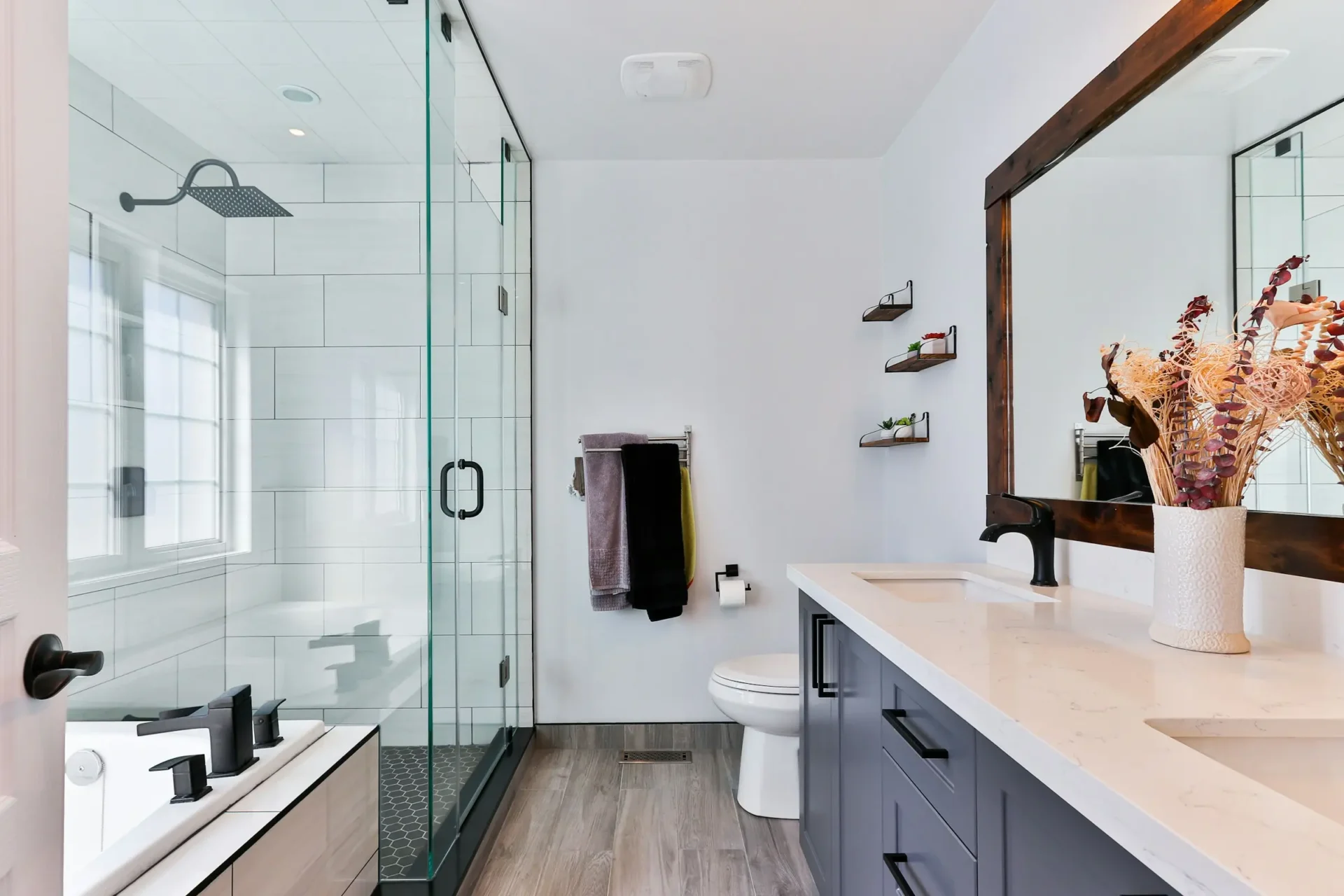
If you’re replacing the tub, a walk-in shower with a clear or minimal frame glass enclosure lets your eye pass unbroken through the space, avoiding visual barriers. Curbless showers (no raised lip) further reduce steps and visual clutter. - Recessed shelving / niches.
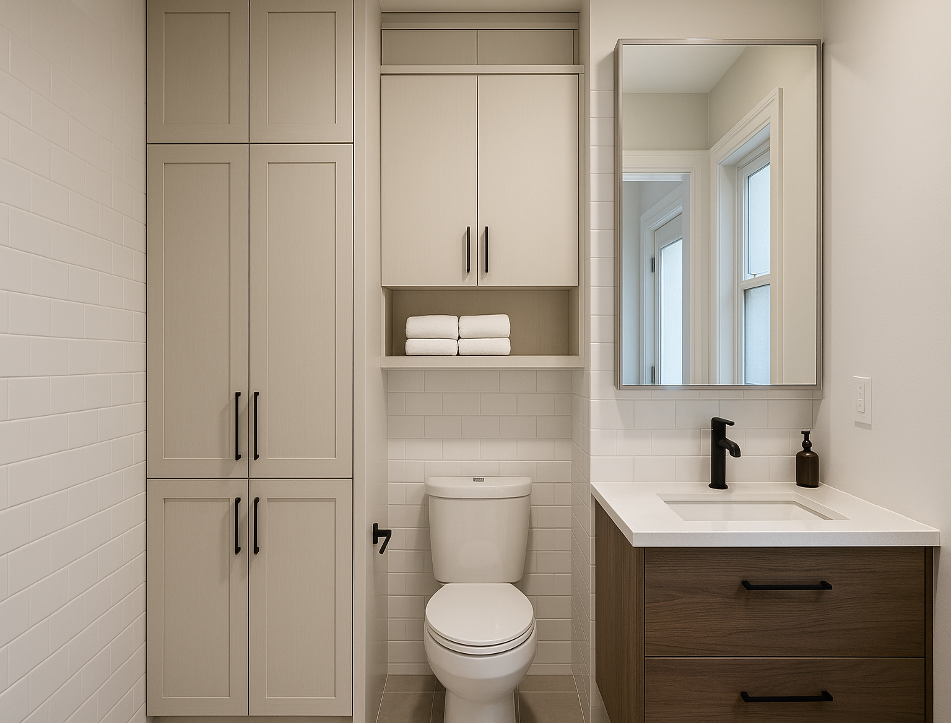
In shower or bathtub walls, use recessed niches for shampoo and soap. Also above sink / vanity walls or above toilet — shallow recessed shelves avoid jutting out storage that reduces room flow.
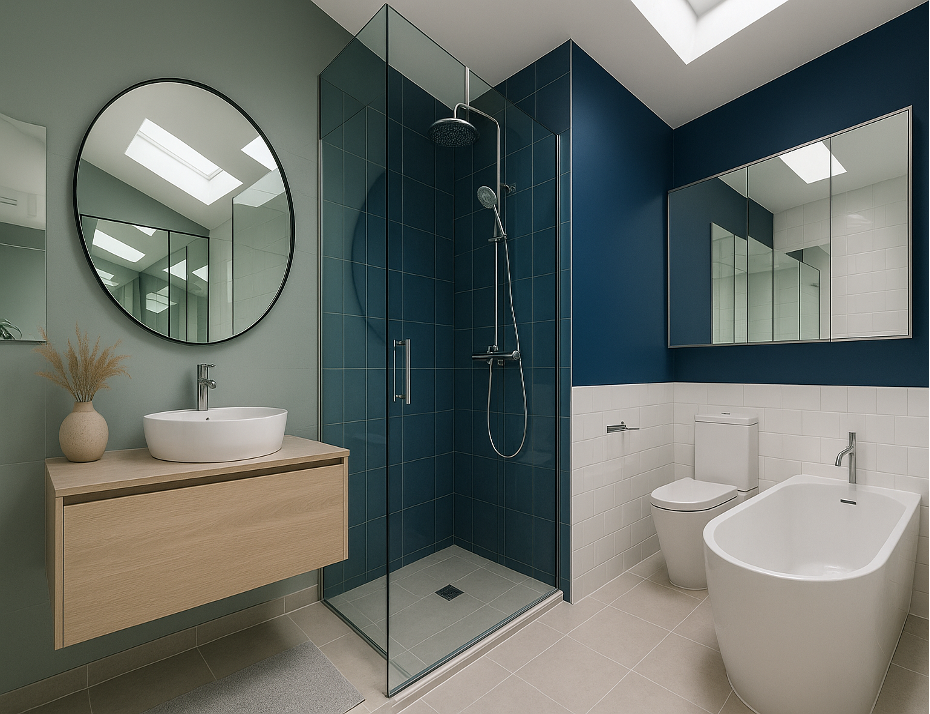
Color, Light, & Mirrors: Visual Tricks to Open Up the Room
- Prioritize light, neutral colors.
Whites, off-whites, creams, pale grays, very soft pastels will help reflect light and make the space feel larger. Dark colours tend to make small rooms feel more confined. Uniform tile / same flooring throughout.
Matching tiles or continuous flooring from the main room into the bathroom (if feasible) avoids visual breaks. Large-format tiles with minimal grout lines reduce the “busy” look. On walls and floors, avoid too many patterns. - Big, well-placed mirrors.
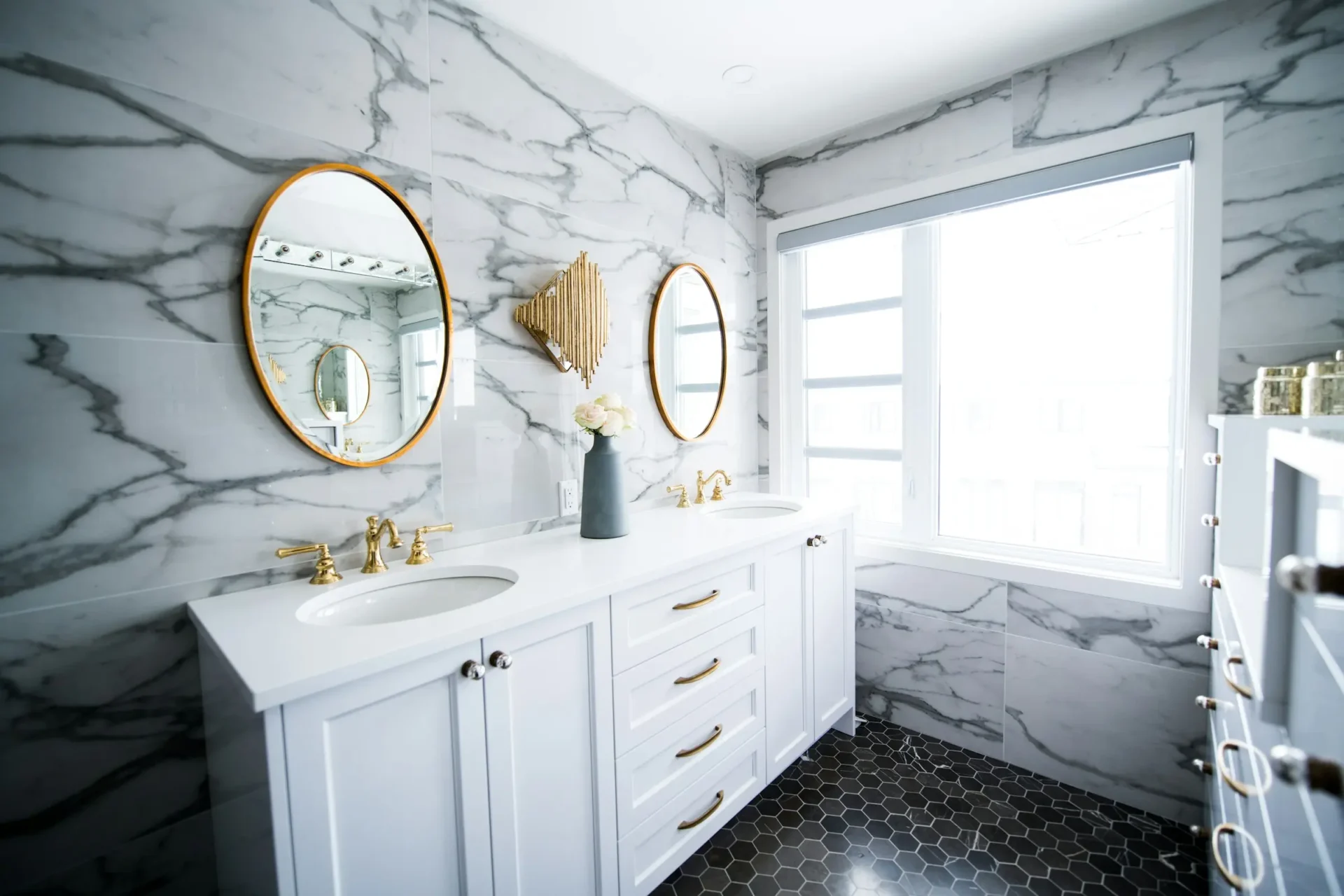
Mirrors reflect light (natural or artificial) and visually double the space. A large mirror above the vanity, or even a wall-to-ceiling mirror (if moisture concerns are addressed), can go a long way. Also mirrored cabinets add storage + reflectivity - Layered lighting.
Use multiple sources: overhead lights, vanity lights, possibly sconces or recessed lighting, and LED mirrors. Toronto winter light is weak, so good artificial lighting matters. If there is natural light, maximize it (sheer curtains, frosted glass, etc.).
Storage & Decluttering
- Go vertical for storage.
Tall, slim storage units, cabinetry that reaches up to the ceiling, shelves above doors, etc. Use wall space: over the toilet, above the vanity. - Use multifunctional fixtures.
Vanities with drawers, built-in organizers, mirror-cabinets, towel warmers that also serve as bars. Anything that combines storage + functionality reduces clutter. - Declutter ruthlessly.
In small bathrooms, even a small number of items (toothbrush holders, bottles, towels) can make the space feel crowded. Only keep daily essentials visible; store less-used items elsewhere. Use baskets, trays, drawer organizers. - Smart accessory choices.
Use hooks, towel racks mounted on walls or backs of doors. Narrow trays or built-in ledges in showers. Avoid bulky decorative items that don’t serve function.
Materials & Finishes: Toronto Considerations
- Moisture-resistant materials.
Use water-proof or water-resistant drywall (green board or better), tiles, grout, and sealants. Toronto’s cold/heat cycles and humid summers can cause issues. Ventilation is critical. - Choose finishes that brighten without glare.
Glossy tiles reflect light but can glare; matte-finish large tiles may help. Mix finishes so light is reflected but in a gentle, diffuse way. - Energy-efficient lighting and heating.
With cold winters, radiant heat under floors or heated towel rails can help. LED lighting reduces energy cost and produces less heat. Vent fan with timer to reduce moisture efficiently.
Layout & Spatial Planning
- Plan clearances carefully.
Codes / best practice: leave enough space in front of toilet, sink, and shower for comfortable use. Toronto building codes will have minimums. Minimizing the size of vanity or choosing wall-hung sinks helps free space. - Try to align plumbing when remodeling.
Moving plumbing is expensive in Toronto due to labour, permit costs, sometimes structural restrictions. If possible, keep major stack and waste lines in same walls/floor to avoid big plumbing costs. - Open up sightlines.
When possible, avoid visual barriers. For example, using glass shower enclosures instead of opaque curtains to keep the eye going. Avoid multiple level changes or step-downs unless needed for drainage. - Use corners wisely.
Place corner toilets or corner sinks, small corner shelves. Corners often wasted are prime real estate in a small bathroom.
Local Practical Tips & Permits in Toronto
- Check Toronto Building Code and bylaws. For bathrooms, especially if altering plumbing or structure, permits are often required. Ensure clearances, ventilation, electrical work are up to code.
- Consider condo restrictions. If you’re in a condominium, there may be restrictions on what you can change (e.g. venting, plumbing in shared walls).
- Hire local trades who understand Toronto climate. Proper insulation, good window seals, high quality vent fans are important with our freeze-thaw and dampness issues.
- Budget for higher material/labour costs. Toronto is expensive. Certain finishes like glass enclosures, custom cabinetry, or tile work cost more. Factor that into your planning.
Final Thought
Maximizing space in a small Toronto bathroom is absolutely possible without sacrificing style or comfort. The key is to think vertically, reduce visual clutter, maximize light (both natural and artificial), choose fixtures that save space, and use smart storage. Even small changes—like switching to a clear glass shower door or installing a large mirror—can produce big results. If you plan it well, the result will be a bathroom that feels larger, more relaxing, and very much yours.