
Toronto homeowners planning a bathroom renovation in 2026 have a lot to get excited about. Designers are balancing luxe, spa-like finishes with practical, energy-saving tech, and homeowners are embracing texture, colour, and materials that make small spaces feel expansive. Below I break down the top trends, why they work in Toronto homes (from condos to older Victorians), and how to use them thoughtfully so your renovation stays stylish and sensible.
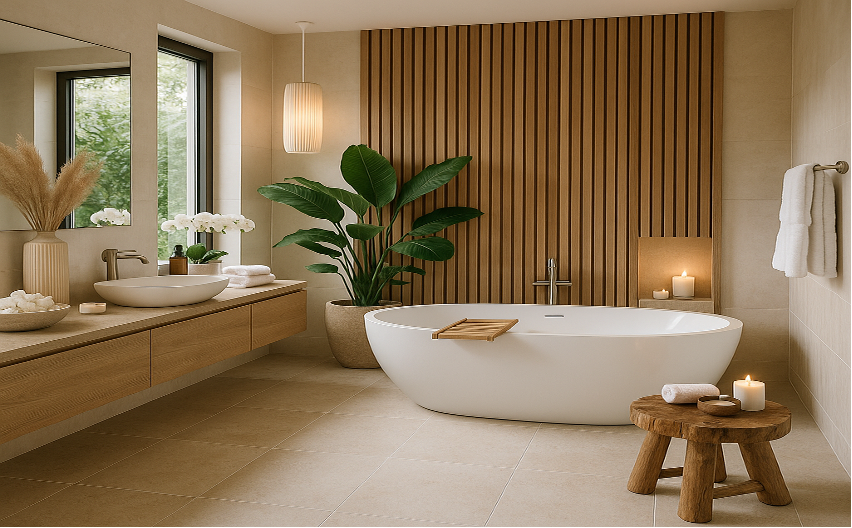
1. Spa-inspired bathrooms: wellness at home
One of the biggest motifs this year is turning bathrooms into wellness retreats. Expect deep soaker tubs, steam or wet rooms, uninterrupted tile from floor to ceiling, bench seating in showers, and layered lighting to recreate a spa’s ambience. Designers in Toronto are leaning into soft, calming palettes—deep ocean blues, seafoam greens, warm grays and neutrals—that make the bathroom feel like a place to decompress.
Practical pick for Toronto condos: if you can’t add a freestanding tub, choose a tiled alcove with a deep soaking profile and a wall-mounted filler to get the spa feel without a major footprint change.
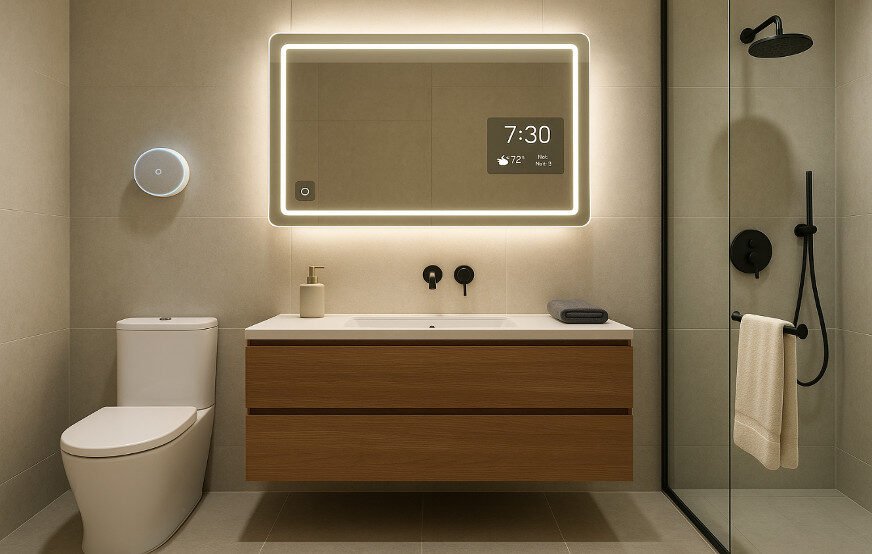
2. Smart, subtle tech — not gadget overload
“Smart” bathrooms in 2026 are less about flashy screens and more about seamless convenience: thermostatic shower controls, app-enabled showers and taps, heated floors with timers, touchless faucets, and smart mirrors with built-in demisting and discreet displays. Toronto remodelers are recommending devices that hide their tech when turned off, preserving a clean aesthetic. For hygiene and convenience, smart toilets (seat warming, automatic flush, self-clean) keep gaining traction. Pro tip: choose one or two smart elements (e.g., shower control + heated floors) rather than outfitting every fixture — that keeps costs down and avoids tech fatigue.
3. Sustainability and durable materials
Sustainability continues to shape choices: low-flow fixtures, reclaimed or recycled tiles, long-life quartz and solid-surface countertops, and LED lighting. Toronto homeowners are also choosing durable finishes that reduce long-term waste and maintenance (porcelain tiles that mimic stone, waterproof engineered cabinetry, and high-quality hardware). These choices lower utility bills and reduce environmental impact.
Actionable swap: replace older toilets with modern dual-flush models and pick LED mirrors/lighting on dimmers to save energy and improve ambience.
4. Texture & natural warmth — fluting, wood and curves
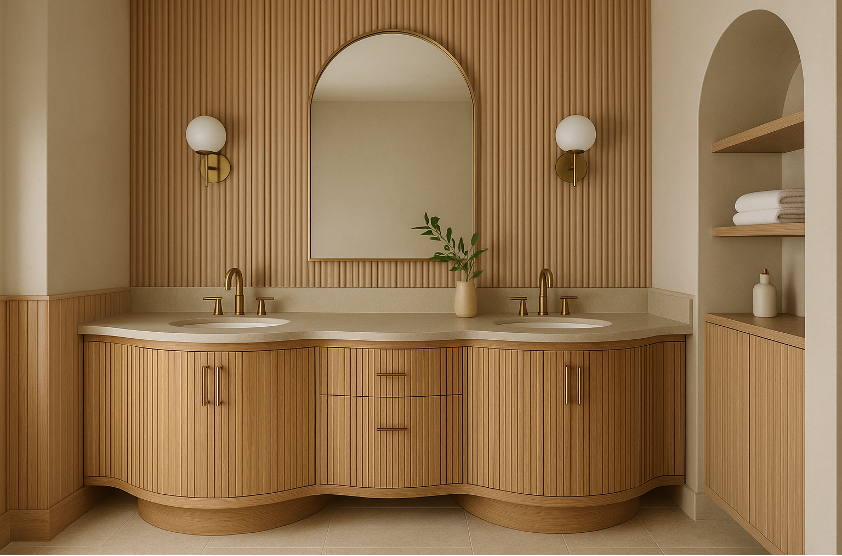
Textured surfaces are having a moment. Fluted wood panels and ribbed cabinetry—think vertical grooving on vanities—add tactile warmth and a mid-century-modern nod that’s trendy in 2026. Curved vanities, rounded mirrors, and soft arches are easing the hard edges that once dominated contemporary bathrooms. These details bring personality without overwhelming small Toronto bathrooms.
Design tip: pair a fluted wood vanity with matte black or brass hardware for contrast. In smaller bathrooms, a single fluted face can be an affordable focal point.
5. Tile-forward design: tubs, feature walls, and continuity
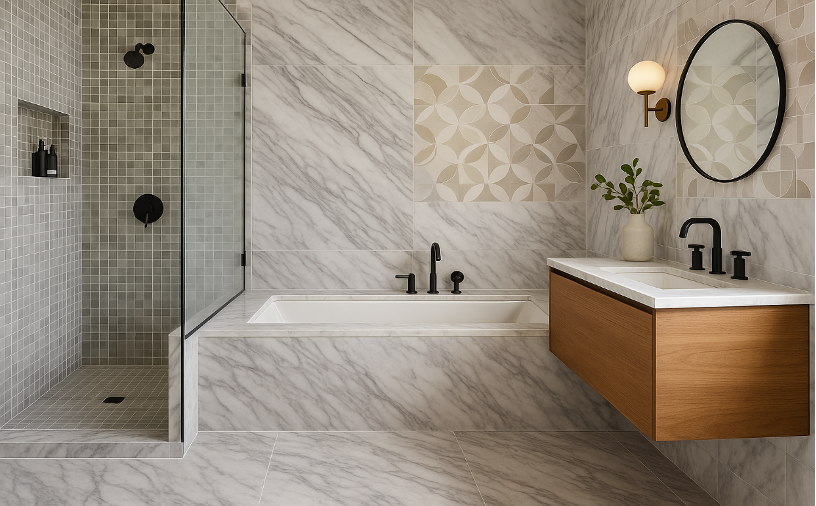
Tiles are no longer confined to shower surrounds. Full “tile-drenched” rooms, tiled bathtub panels, and continuous tile flooring that runs into the shower create a cohesive, luxe appearance. Bold tile patterns—large-format slabs for uninterrupted veining or smaller geometric tiles in a focal niche—are popular. Tiling a bathtub’s side panel or creating a tile mural behind a vanity are quick ways to make a design statement without blowing the budget.
Practical note: porcelain tiles that imitate natural stone give you the look of marble without porosity and maintenance — ideal for Toronto’s humid-summer/cold-winter cycles.
6. Matte black & mixed metals, plus warm brass resurgences
Matte black fixtures continue to be a versatile choice, especially in contemporary condo bathrooms. At the same time, warm brass and brushed gold accents are returning as luxury touches—often mixed intentionally with black or chrome for depth. Toronto designers recommend choosing a primary metal and adding one accent finish to avoid a cluttered look.
7. Floating vanities & clever storage
Floating vanities maximize the sense of space and make floor cleaning easier, both valuable in compact Toronto bathrooms. Integrated drawers, pull-out organizers, and recessed medicine cabinets keep counters clear and enhance a minimalist look. Designers also increasingly use built-in niches and recessed shelving in showers to maintain clean lines.
8. Colour & pattern: moody blues, soft greens, and statement accents
While crisp white bathrooms remain timeless, 2026 favours moody jewel tones and nature-inspired hues—deep navy, emerald or seafoam green—often balanced with neutral floors and warm wood tones. For those wary of full-colour commitment, accent tiles or a painted ceiling can deliver impact without long-term commitment.
9. Accessory trends: mirrors, lighting, and finishes
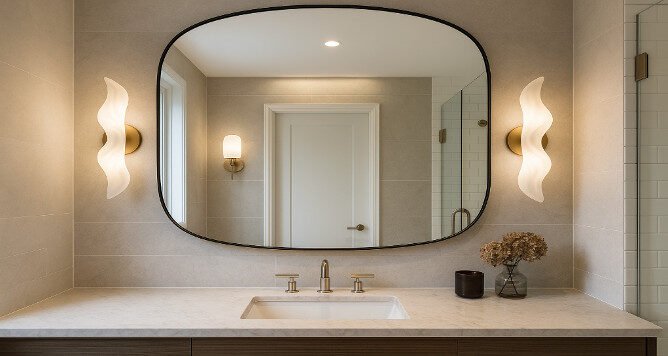
Oversized mirrors, sculptural sconces, and layered lighting are essential in modern Toronto bathrooms. Backlit mirrors with dimmable temperature control, LED task lighting, and decorative pendants over vanities create both function and drama. Consider warm light temperatures (2700–3000K) for a comfortable, spa-like glow.
10. Toronto-specific practicalities: permits, costs, and logistics
If your renovation includes plumbing reconfiguration or structural changes, the City of Toronto commonly requires permits and inspections — especially for full-bath conversions or changing plumbing stacks. Permits protect insurance coverage and ensure code compliance. In 2025, average Toronto bathroom renovations still have a wide cost range depending on size and scope, but mid-range projects commonly fall between the low five-figure range and higher for luxury overhauls; condo renovations may cost more due to building regulations and staging logistics. Always budget a contingency (10–20%) for unforeseen issues in older houses.
Quick checklist:
- Confirm whether plumbing/electrical changes require permits.
- Factor condo building rules and timing into your schedule.
- Book qualified local trades (licensed plumbers, electricians, and licensed contractors).
How to blend trends without a quick-fashion look
- Pick one standout trend (e.g., spa shower or fluted vanity) and build neutral, durable choices around it.
- Layer textures rather than colours: matte fixtures + fluted wood + large-format tiles.
- Future-proof: choose durable materials and simple smart tech that’s replaceable (non-proprietary hubs, standard fittings).
- Work with a Toronto renovator who knows local permitting and condo requirements — that saves time, stress, and hidden costs.
Before you start: a short Toronto renovation roadmap
- Define your budget and must-haves.
- Gather inspiration (photos, tiles, finishes).
- Contact 2–3 contractors and ask for references and proof of licensing.
- Confirm permits and condo board approvals (if applicable).
- Order long-lead items (vanities, tiles, fixtures) early.
- Plan a temporary shower/bath solution if you’ll be without a bathroom during work.
Final thoughts
2026 is all about balance: luxe, spa-like touches blended with discreet smart features and eco-conscious choices. Toronto homeowners are responding to smaller footprints by emphasizing texture, continuity, and intelligent storage instead of over-accessorizing. Whether you live in a downtown condo or a century home in the Annex, there are creative, budget-friendly ways to make your bathroom feel like a modern sanctuary while keeping resale value strong.
Leave a Reply